← Back to Work

GLOBAL · 2019–2022

Vodafone SmartTech

Standing up a new connected hardware capability inside a global organisation. Three years, three squads, three products, 20+ markets.

[ THE SITUATION ]

Before Vodafone SmartTech existed, Vodafone's approach to hardware was straightforward. Find a product. White-label it. Put the Vodafone name on it. Sell it.

That model has a ceiling. You are entirely dependent on what other companies build. You have no control over the experience, the quality, or the direction. And as connected hardware became a genuine growth category, that ceiling started to matter.

A small team was brought in to change that. To build Vodafone SmartTech from the ground up. To move from reseller to product unit. To conceive, design and deliver connected hardware end to end, in multiple categories, under one roof. I was part of that founding team.

[ WHAT I BUILT ]

Standing up a new product capability inside a global organisation is not a product management job. It is an organisational design job that also requires you to ship product.

I set up and ran three cross-functional squads, each one built around a specific product category. Hardware engineers, firmware developers, industrial designers, third party suppliers, front end and back end all aligned under one operating model. People who had never worked together before, with entirely different ways of measuring progress, pulled into a shared delivery rhythm.

That required coaching as much as it required process. Helping people understand what a squad actually is. What good looks like. How to surface blockers early. How to move fast without losing each other. Across those squads we built three products from scratch.

[ THE PRODUCTS ]

[ PROJECT WIGGINS ]

Project Wiggins

A GPS bike tracker. I built the MVP, worked with mechanical engineers on the industrial design, scoped the back end build and hired the product manager who would carry it to launch. It launched across Europe. The foundation was ours.

Wiggins GPS tracker app
Wiggins tracker mounted on bike

Launched across Europe · GPS tracking · Connected hardware

Home Security

A connected doorbell and security system, designed and built in-house rather than badged from elsewhere.

AMOR

A smartwatch for elderly loved ones. Not the ugly emergency alarm necklace they would refuse to wear because it felt like a badge of frailty. Not the pull cord in the corner of the room. Something different. Something they would actually want on their wrist.

The name came from Alec, Italian, on our team. AMOR. For love. That tells you everything about the spirit we built it in.

We designed it to be elegant. Large screen. Easy to read. A single unmistakeable emergency button on the side. But it was not just an alarm. It was a companion. Step counting. Family messaging. A thinking of you nudge that let elderly users signal they wanted connection without having to ask for it directly.

The insight that drove everything: existing solutions failed at the moment they were needed most. Press an alarm necklace and you do not know if anyone heard. Get no feedback. Press it again. You are on the floor, frightened, and the silence is the worst part. AMOR solved for that. Instant confirmation. Direct connection to family, not a call centre.

We spoke to users obsessively. Every feature came from real conversations with real elderly people about what made them feel safe versus what made them feel watched. The CADs were done. The industrial design was beautiful. And then the business pivoted. AMOR never launched.
[ THE REALITY OF PRODUCT INSIDE A LARGE ORGANISATION ]

A global pandemic hit mid-tenure and rewrote every assumption about how teams work and what people need. Across it all, across three categories and three squads, the work continued.

The products that did not ship were genuinely difficult to accept. There is nothing more defeating than building something that is supposed to reach customers and watching the business change direction before it does.

But I never stopped building. And I never stopped talking to users.

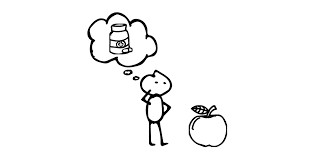
[ PAINKILLER OR VITAMIN? ]

Products are either painkillers or vitamins.

A painkiller solves an excruciating problem. Someone is on the floor, frightened, pressing a button and not knowing if anyone heard. That pain is so acute it overrides everything else. You build for that with urgency and precision.

A vitamin makes something better that already exists. Headspace did not invent meditation. Calm did not invent sleep. They made something that already existed easier to access and nicer to live with. Nobody was suffering without them. But millions of people are genuinely better with them.

Neither is wrong. But you have to know which one you are building. The mistake is treating a vitamin like a painkiller, or building a painkiller with vitamin-level urgency.

Painkiller vs Vitamin illustration

[ PHILOSOPHY APPLIED ]

Every product I have worked on since, I ask the same question first: painkiller or vitamin? The answer shapes everything that follows.

The other thing Vodafone taught me: category does not matter. I have worked in connected homes, drones, care technology, bike tracking, retail real estate and AI. The philosophy is identical across all of them. Understand the human. Understand the pain. Build the solution that earns its place in their life. You do not need to have lived in a category to build well for it. You need to be genuinely curious about the people inside it.

[ WHAT IT TAUGHT ME ]

Resilience is not about not feeling the disappointment. It is about doing the work anyway, with the same care and rigour whether the product ships or not.

The work is never wasted. It compounds. Every conversation with a user, every decision about tone of copy, every feature born from a real insight. It goes somewhere, even when the product does not.

← Back to Work